Sampling Station
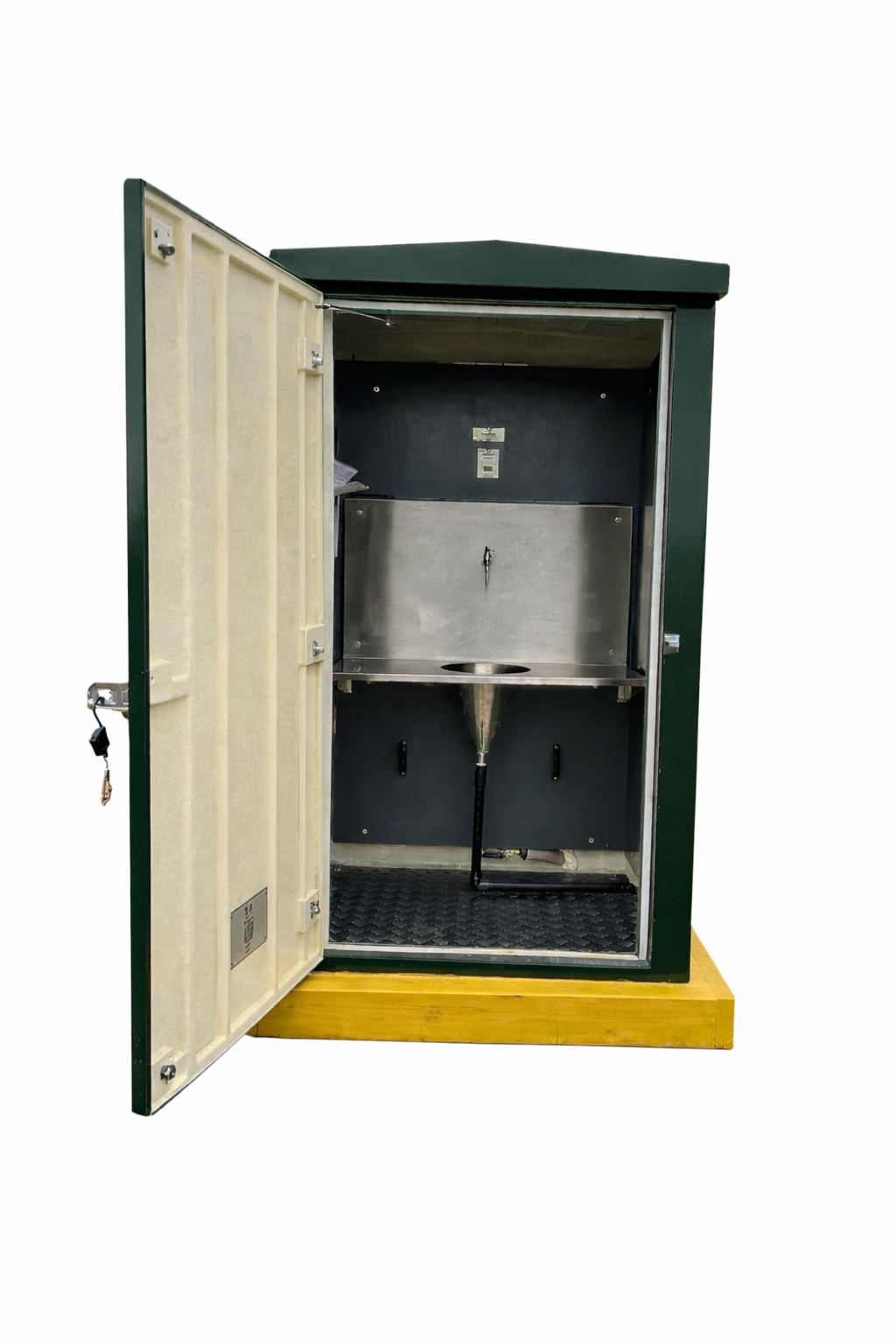
Our Water Sampling Stations provide a secure, hygienic, and reliable solution for collecting water samples from service reservoirs, distribution networks, and wastewater systems. Designed for durability and ease of use in the field, each station is installed within a robust kiosk and fitted with a purpose-built sampling sink and controlled sampling point.
The station can be gravity-fed where sufficient head pressure is available from the water source. Where this is not possible, our team can install pump systems to deliver the required flow rate to the sampling tap, ensuring consistent and reliable sampling conditions.
Each unit features a 316 stainless steel conical sink, manufactured in-house to provide a hygienic and corrosion-resistant environment for sample collection. The design allows safe drainage and easy cleaning, making it suitable for long-term operation in both potable water and wastewater environments.
Where required, we can also install trace heating systems to protect pipework and equipment from freezing, ensuring reliable operation in colder environments.
Our sampling stations are fully manufactured, installed, and commissioned by our experienced team, providing a complete turnkey solution from initial survey through to final handover.
Scope of Works
Our full service typically includes:
Site survey to assess location, infrastructure, and installation requirements
Light civil works and ground preparation
Installation of the kiosk structure
Manufacture and installation of the 316 stainless steel conical sink
Installation of sampling taps and associated pipework
Electrical works including solar power systems, control panel building, and wiring to electrical supplies where required
Trace heating installation where frost protection is necessary
Hot tapping of existing pipelines to install our sampling lances without interrupting service
Full installation, testing, and commissioning by our professional installation team
The result is a robust, reliable sampling facility designed to meet operational requirements while minimising disruption to existing infrastructure.
